Charleston is West Virginia's capital — a mountain city where the Kanawha and Elk Rivers converge in the heart of the Appalachian Plateau. The Victorians and Queen Annes of the East End Historic District. The hillside homes of South Hills and Kanawha City with chimneys at challenging elevations. The established colonials of St. Albans and Nitro in the Kanawha Valley. And the rural properties throughout Kanawha County where wood stoves are primary heat — not supplemental luxury. Charleston's valley-bottom geography traps moisture and cold air, creating conditions that accelerate chimney deterioration. Mountain winters at 900+ feet elevation produce five-plus months of heavy heating demand. Since 2004, Shamrock has swept Charleston chimneys with expertise built for the Mountain State's demanding conditions.
Why Charleston Homeowners Choose Shamrock for Chimney Sweeping
The Kanawha Valley's chimney challenges combine mountain climate with coal heritage. Many Charleston chimneys were originally built for coal combustion and have been converted to wood, gas, or oil. These conversions sometimes create oversized flues, residual coal tar deposits, and masonry conditions specific to coal-era construction. Our sweep team understands Mountain State chimneys — coal heritage, wood-heat culture, valley moisture, and mountain freeze-thaw. Camera documentation, honest assessment, no pressure.
The Complete Charleston Chimney Sweep Process
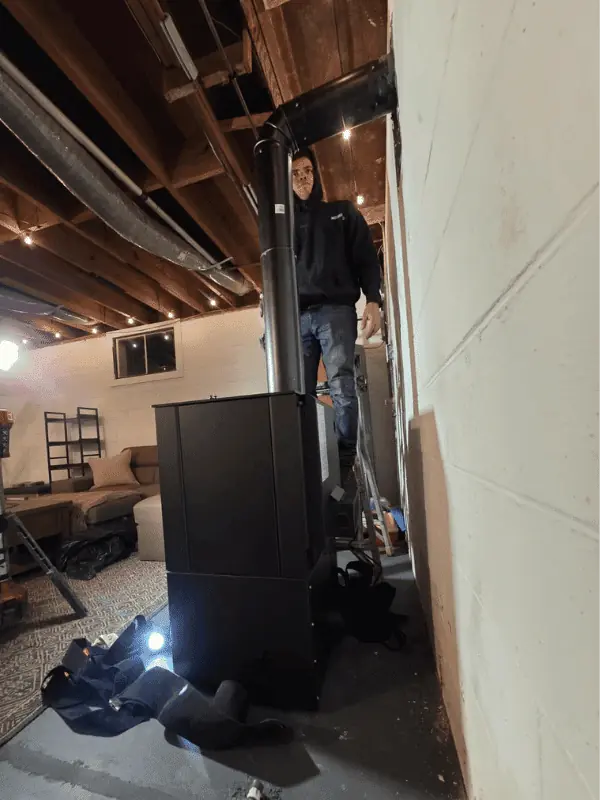
Every Charleston sweep follows our systematic protocol. Drop cloths and HEPA containment protect your home. We inspect the firebox and damper, then clean the full flue with rotary brushes matched to your system. For South Hills and hillside properties, we coordinate safe access. The smoke chamber receives specialized cleaning. Post-sweep inspection evaluates for valley-bottom moisture damage, mountain freeze-thaw stress from 55-70 annual cycles, and coal-conversion conditions. Camera footage and written report document everything.
Charleston's Most Requested: Annual Sweep & Inspection
The combined sweep and inspection is the Kanawha Valley's most popular service. One visit, flat price, complete maintenance. We remove creosote while evaluating every component for mountain-valley damage and coal-era conditions. Written report with photos provided.
When Your Charleston Chimney Sweep Reveals Mountain Valley Damage
Sweeping reveals conditions shaped by Charleston's mountain-valley environment. Common findings include: valley-moisture damaged mortar, cracked flue tiles from 55-70 freeze-thaw cycles, coal-era residual deposits in converted chimneys, and heavy creosote from wood-stove primary heat. We document findings with camera footage and provide recommendations built for Mountain State conditions.
Why Annual Chimney Sweeping Is Critical in Charleston
Charleston's mountain-valley climate makes annual sweeping critical. Five-plus months of heating produce heavy creosote. Valley-bottom moisture keeps deposits adherent. Mountain freeze-thaw cycles damage interiors aggressively. Coal-converted chimneys may contain flammable residual deposits. And wood stove primary heat creates accumulation rates far above casual fireplace use. Annual sweeping is essential.
Creosote in Charleston: Mountain Winters Mean Heavy Buildup
The Kanawha Valley's mountain geography creates aggressive creosote conditions. Valley-trapped cold keeps chimney walls at low temperatures. Moisture from the Kanawha and Elk Rivers produces stickier deposits. Wood stove primary heat — common throughout the Mountain State — generates far more creosote than occasional fireplace use. Annual sweeping is essential; heavy burners should consider mid-winter cleaning.
Beyond Sweeping: Complete Charleston Chimney Care
Chimney sweeping addresses fire risk, but Charleston chimneys face mountain-valley challenges. Valley moisture drives water damage. Mountain freeze-thaw cracks masonry. Coal-era flues may need modern relining. Our sweep team identifies conditions and coordinates services built for the Mountain State.