Manchester is the Queen City — New Hampshire's largest city, built along the Merrimack River where the massive Amoskeag Manufacturing Company once operated the largest cotton textile mill complex in the world. The city's residential neighborhoods reflect that industrial heritage and the communities that grew around it. The Victorian and Italianate homes of the Near West Side. The brick multi-family buildings and mill worker housing near the Amoskeag Millyard. The established colonials and Capes of Bedford, Goffstown, and Hooksett. The newer construction in Londonderry, Derry, and Auburn. And the rural properties throughout Southern New Hampshire where wood stoves are primary heat sources, not luxuries. Since 2004, Shamrock Chimney has served all of Manchester with CSIA certified expertise built for the Granite State's demanding climate — long winters, heavy snow, and temperatures that test every chimney system to its limits.
Honest Chimney Service for the Granite State
New Hampshire's state motto is 'Live Free or Die' — and Granite Staters take independence, self-reliance, and honest dealing seriously. Our veteran-founded company shares those values. Camera footage from inside your flue. Written report with photos. Straight answers about what needs attention. No manufactured urgency. No padded quotes. If your Manchester chimney is sound, we say so. When it needs work, we explain the issue, give you a fixed price, and let you decide. No pressure. New Hampshire homeowners who've been burned by pushy contractors appreciate the difference.
Every Manchester Chimney Type — Mill City to Suburbs
Southern New Hampshire's housing ranges from 19th-century mill-era construction to modern development. Multi-flue configurations in converted Amoskeag-era buildings. Victorian chimneys on Near West Side homes. Traditional masonry on colonials in Bedford and Goffstown. Factory-built metal systems in newer Londonderry and Derry construction. Wood stove installations — extremely popular throughout the Granite State as genuine primary or supplemental heat. Gas fireplace inserts. Oil furnace flues — very common in older Manchester homes. Pellet stove venting systems. And the rural properties throughout Southern NH where wood-fired heating is a way of life, not a novelty. We handle everything because New Hampshire demands it.
Manchester's Most Popular Service: Sweep & Inspection
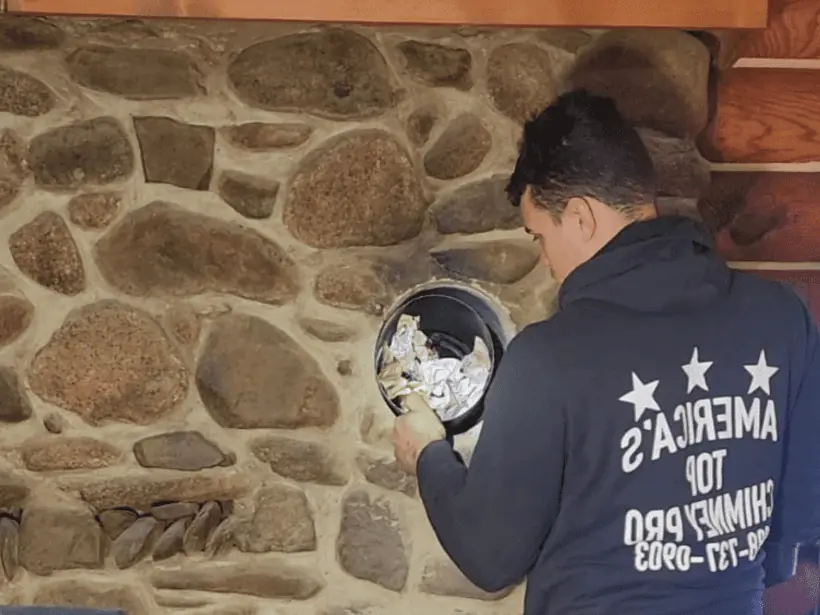
Most Manchester homeowners start with our combined sweep and inspection — one visit, flat pricing, complete coverage. We clean your flue using professional rotary equipment with HEPA-filtered vacuums, then inspect every component: firebox, damper, smoke chamber, liner, crown, cap, and flashing. Camera footage documents the interior. For Manchester's multi-family buildings, we service all flues in one visit. For Southern NH real estate transactions, Level 2 inspections satisfy lender requirements with fast turnaround.
Manchester Masonry: Merrimack Valley Meets Northern New England Cold
Manchester chimney masonry endures conditions that push materials to their limits. The Merrimack River corridor generates humidity that keeps masonry saturated during warmer months. Winter delivers 70-90 freeze-thaw cycles with temperatures regularly dropping below zero — sometimes well below. Annual snowfall averages 60+ inches, loading chimney crowns for five to six months. Road salt attacks chimney bases heavily. And Manchester's older brick — much of it from the mill era — was manufactured for different standards than modern masonry. Our crew uses arctic-rated mortar formulations, builds reinforced crowns for extreme snow loads, and applies breathable waterproofing that slows the Granite State's relentless assault on chimney masonry.
Annual Chimney Service: Non-Negotiable in New Hampshire
New Hampshire's climate makes annual chimney maintenance essential — arguably more so than anywhere in the Lower 48. A six-to-seven month heating season (October through April, sometimes May) accumulates heavy creosote. Merrimack Valley humidity saturates masonry. Over 70 freeze-thaw cycles crack moisture-laden brick. Heavy snowfall loads chimney tops for months. Animal nesting blocks flues every fall. And the wood stove culture that defines the Granite State produces higher creosote formation rates than open fireplaces. Annual professional inspection is how New Hampshire homeowners stay ahead of the climate.
Creosote in Manchester: Extreme Cold, Maximum Buildup
Manchester's extended heating season and extreme cold create some of the most aggressive creosote conditions in the Northeast. Sub-zero temperatures keep chimney walls cold, intensifying condensation when warm flue gases rise. Merrimack River humidity adds moisture. Wood stove users throughout Southern NH face particularly high accumulation rates from months of daily use — stoves operate at lower flue temperatures, promoting heavier deposition. Over a full Granite State winter, active fireplaces and stoves can far exceed the NFPA's 1/8-inch hazard threshold. Annual sweeping is essential. Heavy wood stove users should strongly consider mid-winter cleaning.
Water and CO: New Hampshire's Hidden Chimney Threats
Water drives more cumulative chimney damage in Manchester than fire. Merrimack Valley humidity, heavy New England precipitation, 70+ freeze-thaw cycles, and snowmelt combine to deteriorate masonry progressively. Carbon monoxide from oil furnaces and gas appliances — both common in New Hampshire homes — is the most immediately lethal threat. Tightly sealed homes designed to keep out Granite State cold can trap CO to dangerous levels from even small leaks. Our inspections evaluate both threats on every visit.