Norfolk sits at the heart of Hampton Roads — where the Chesapeake Bay meets the Elizabeth River and the Atlantic Ocean's influence reaches every neighborhood. The charming bungalows and colonials of Ghent and Colonial Place. The waterfront properties along Ocean View and East Beach. The established brick homes in Larchmont and Edgewater. The military housing communities near Naval Station Norfolk. Each neighborhood faces chimney challenges shaped by proximity to saltwater, exposure to tropical weather systems, and the relentless humidity of Tidewater Virginia. Since 2004, Shamrock Chimney has served Norfolk homeowners with CSIA certified expertise specifically adapted to the demands of coastal Virginia's harshest chimney environment.
Honest Chimney Care for Norfolk's Naval City
Norfolk is a military town, and our veteran-founded company speaks the language. We understand PCS timelines, deployment schedules, VA loan inspection requirements, and the reality of maintaining a home while serving. Beyond the military community, Norfolk homeowners across every neighborhood appreciate our straightforward approach: show up on time, do thorough work, report findings honestly, charge what we quoted. No sales pressure, no manufactured urgency, no inflated estimates. When our technician finishes your Norfolk chimney inspection, you get facts — camera footage, written report, honest assessment. We've served Norfolk for twenty years because word spreads when a company actually does what it promises.
Every Norfolk Chimney Configuration — Coastal Expertise
Norfolk's housing stock includes pre-war bungalows, mid-century colonials, brick ranches, waterfront homes, and newer construction — each with its own chimney type and maintenance requirements. We service traditional masonry chimneys, factory-built metal flue systems, wood stove installations, gas fireplace inserts, and oil furnace flues. Norfolk's coastal environment demands specific knowledge: which cap materials resist salt corrosion, which mortar formulations hold up against Chesapeake Bay exposure, how to waterproof masonry that's within range of salt spray. Our CSIA certified technicians bring coastal-specific expertise that generic chimney companies lack.
Norfolk's Go-To: Complete Sweep & Inspection
Most Norfolk homeowners start with our combined sweep and inspection — one visit, one flat price, everything covered. We clean your flue completely using professional rotary equipment with HEPA-filtered vacuums, then inspect every accessible component: firebox, damper, smoke chamber, liner, crown, cap, and flashing. Camera footage documents the interior condition. You get a written report with photos and our honest recommendations. For Norfolk military families facing PCS moves, we also provide Level 2 inspections that satisfy VA loan and standard mortgage lender requirements.
Norfolk Masonry: Built to Resist Chesapeake Bay
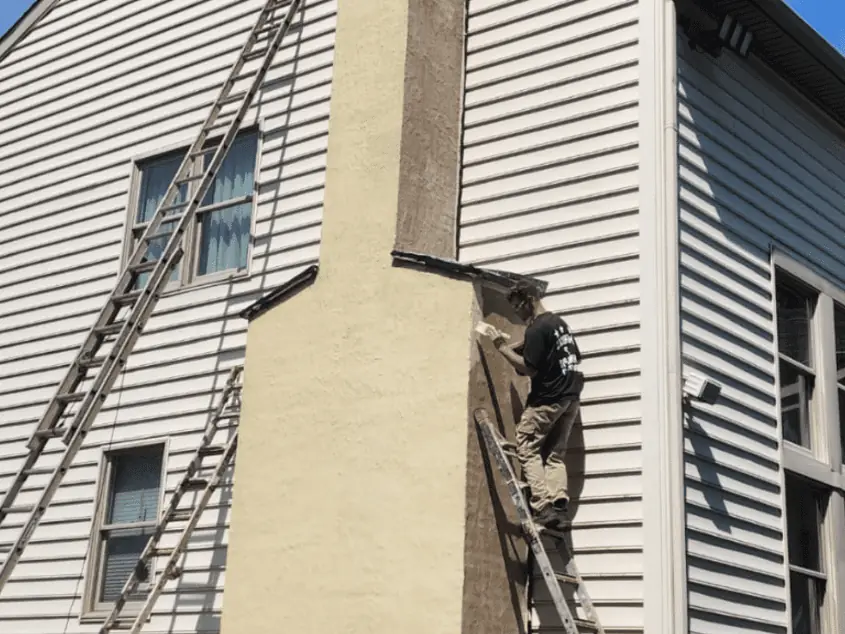
Norfolk's chimney masonry faces the most aggressive conditions in Virginia — salt air from the Chesapeake Bay, hurricane-force winds during storm season, intense summer humidity, and enough freeze-thaw cycles during winter to crack moisture-saturated brick. Salt penetrates mortar joints and brick faces, weakening them from within while environmental forces attack from outside. Our Norfolk masonry crew uses salt-resistant mortar formulations, marine-grade metal components, and breathable waterproofing sealants specifically designed for coastal exposure. For Ocean View and waterfront properties with direct bay exposure, we treat every masonry repair as a coastal construction project.
Annual Chimney Maintenance: Essential for Tidewater Homes
Norfolk's Tidewater climate works on chimneys twelve months a year — harder and faster than anywhere else in Virginia. Summer humidity saturates masonry and promotes mold growth inside dormant flues. Hurricane season (June through November) brings wind, heavy rain, and potential storm surge that stress every chimney component. Fall animal nesting is common in Norfolk's tree-lined neighborhoods. Winter delivers enough freeze-thaw cycles to exploit every moisture-weakened joint. And salt air corrodes metal components continuously regardless of season. For Norfolk homeowners, annual chimney inspection isn't recommended — it's essential.
Creosote in Norfolk: Coastal Humidity Makes It Worse
Norfolk's high humidity affects creosote formation and adhesion inside your chimney. Moisture-laden air increases the water content of combustion gases, which promotes heavier creosote deposition on flue surfaces. The deposits bond more aggressively in humid environments — meaning Norfolk creosote is stickier, harder to remove, and accumulates to hazardous levels faster than in drier climates. Virginia's moderate heating season (three to four months of regular use) creates a false sense of security — many Norfolk homeowners assume mild winters mean less creosote. The opposite is true if you're burning at lower temperatures. Annual sweeping is essential regardless of how mild the Norfolk winter feels.
Salt, Water, and CO: Norfolk's Triple Chimney Threat
Norfolk chimneys face a triple threat that inland homes don't contend with. Salt air corrodes metal components and weakens masonry bonds year-round. Water from coastal rain, hurricane remnants, and relentless humidity penetrates every crack and progressively destroys the chimney structure through freeze-thaw and chemical deterioration. And carbon monoxide from gas and oil appliances venting through compromised liners is the most immediately lethal risk — an odorless, invisible gas that can reach dangerous concentrations in occupied rooms. Our Norfolk inspections evaluate all three threats systematically because addressing any two while ignoring the third still leaves your family at risk.