Philadelphia is the City of Brotherly Love — America's sixth-largest city, where the nation's largest inventory of rowhome housing creates chimney liner challenges at massive scale. The rowhomes of South Philly, Fishtown, Kensington, and Northern Liberties — tens of thousands of connected chimneys. The Victorians of Chestnut Hill, Mt. Airy, and Germantown. The colonials of the Main Line communities. Delaware Valley humidity accelerates liner deterioration. Philadelphia's rowhome density means liner failure creates neighborhood safety hazards. Since 2004, Shamrock has relined chimneys across Philadelphia with rowhome-specific expertise and materials engineered for the Delaware Valley's conditions.
Why Philadelphia Homeowners Choose Shamrock for Chimney Liners
Philadelphia's relining demands are defined by rowhome scale. The city has more rowhomes than any market in America — each sharing chimney walls with neighbors. A deteriorated liner in one home can allow carbon monoxide into adjacent properties. Many pre-war rowhomes have offset flues requiring flexible or cast-in-place solutions. And Delaware Valley humidity accelerates clay tile deterioration. We deliver rowhome relining at Philadelphia scale — video inspection, proper liner selection, and sealed installation protecting entire rows.
Complete Philadelphia Chimney Relining Process
Every Philadelphia reline starts with video inspection — we camera the flue to assess condition, identify offsets, and measure dimensions. Rowhomes get shared-wall safety evaluation. We recommend liner type based on appliance, flue path, and Philly's conditions. Installation includes insulation wrap, top plate, rain cap, and proper connections. Final draft testing confirms safe, code-compliant operation.
Philadelphia's Most Popular: Stainless Steel Flex Liner
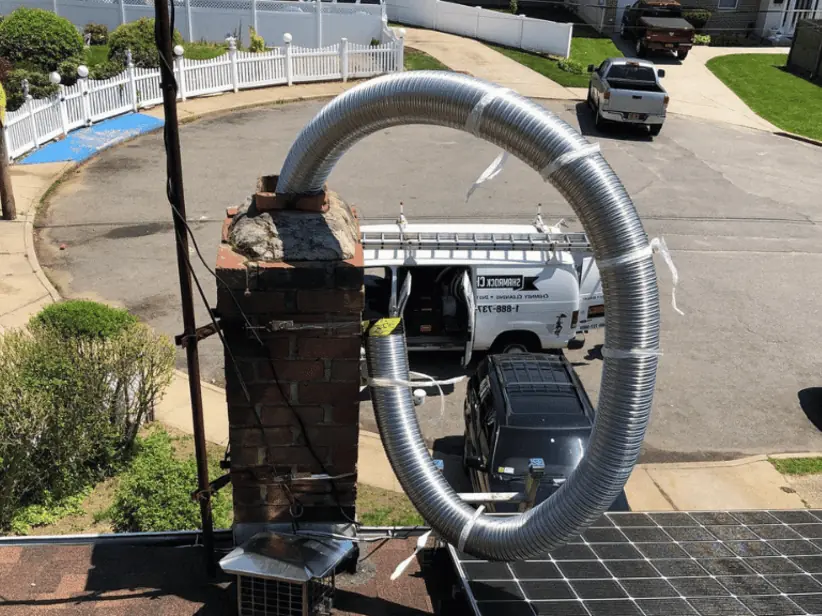
The stainless steel flex liner is Philadelphia's most popular — navigating rowhome flue offsets while sealing the system against flue gas migration. 316Ti alloy resists the acidic condensation that destroys clay tiles in the Delaware Valley's humid environment.
Why Your Philadelphia Chimney Needs a New Liner
A deteriorated Philadelphia liner is a neighborhood safety hazard. In rowhomes, cracked tiles and eroded mortar allow carbon monoxide to migrate through shared walls. Delaware Valley humidity accelerates this deterioration year-round. A stainless steel liner creates a sealed, gas-tight flue system — the most important safety investment for any Philly rowhome.
Liner Types for Philadelphia
Liner selection for Philadelphia depends on appliance and flue condition. Stainless 316Ti flex: our standard for wood and oil — navigates offsets, resists corrosion, lifetime warranty. Cast-in-place: for severely damaged or highly offset pre-war flues. Aluminum: gas-only appliances in standard flues — lighter, cost-effective.
Rowhome Shared-Wall Carbon Monoxide Risk
Philadelphia's rowhomes share chimney walls with one or two neighbors. A deteriorated liner allows combustion gases — including carbon monoxide — to seep through cracked tiles into adjacent homes. This isn't theoretical — it's a documented hazard in connected housing. Our stainless liners create sealed systems that eliminate cross-wall gas migration in Philly's dense rowhome inventory.
Pre-War Offset Flue Solutions
Many Philadelphia rowhomes built before 1940 have flue offsets — the chimney path changes direction between floors. Rigid liners can't navigate these bends. Our flexible stainless liners follow the actual flue path, and our cast-in-place option creates a seamless new flue inside even the most irregular pre-war chimney.