Richmond is a city built on brick — and its chimneys tell the story. The elegant brick rowhouses of the Fan District and Museum District, with their decorative corbeled chimney tops, are architectural signatures of the city. The grand colonials and Tudors of the West End and Windsor Farms showcase some of Virginia's finest residential masonry. The historic homes in Church Hill and Shockoe Bottom date to the 18th century, with chimney masonry that's survived the Civil War and centuries of James River weather. And the newer construction spreading through Short Pump, Glen Allen, and Midlothian represents modern building standards. Since 2004, Shamrock Chimney has served all of Richmond — from painstaking historic preservation to routine suburban maintenance.
Honest Chimney Service for the River City
Richmond values authenticity, and so do we. Our veteran-founded company built its Richmond reputation the old-fashioned way — by doing honest work and letting satisfied homeowners spread the word. When our technician finishes inspecting your chimney, you see camera footage from inside the flue, get a written report with photos, and receive a straightforward assessment. No manufactured urgency. No inflated estimates. If your chimney is in good shape, we say so — and you'll trust our judgment more the next time we identify something that needs attention. Twenty years of Richmond referrals confirms this approach earns more business than any sales tactic.
Every Richmond Chimney Type — One Expert Team
Richmond's architectural range demands versatile chimney expertise. We service traditional masonry chimneys on historic rowhouses and colonials, multi-flue configurations in Fan District homes with fireplaces on every floor, factory-built metal flue systems in newer West End and Short Pump construction, wood stove installations, gas fireplace inserts, and oil furnace flues. Many older Richmond homes have been renovated with gas inserts inside original masonry fireplaces — a configuration requiring specific liner sizing. We also handle the unique challenges of converted industrial and commercial buildings in Scott's Addition and Manchester.
Richmond's Most Popular Service: Complete Sweep & Inspection
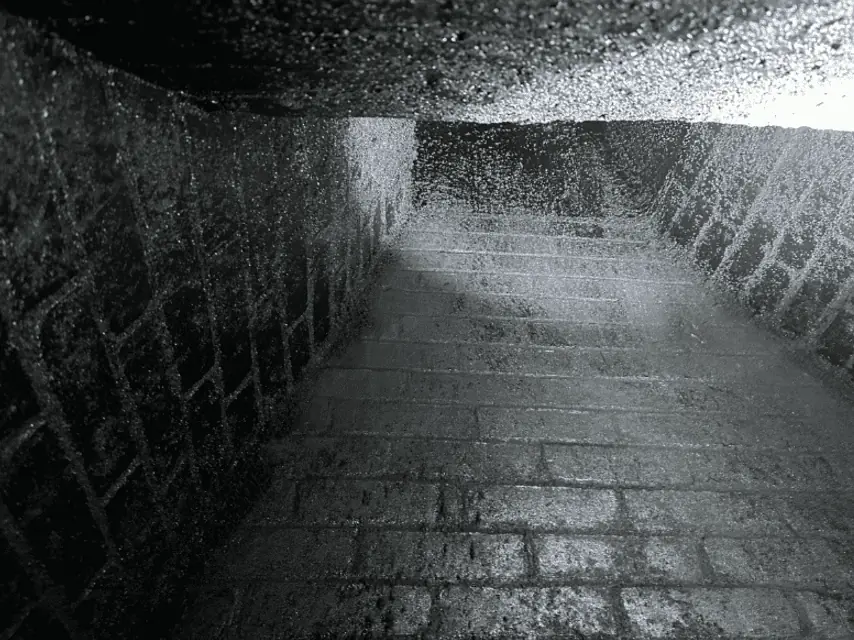
The majority of Richmond homeowners start with our combined sweep and inspection — one visit, one flat price, everything covered. We clean your flue completely using professional rotary equipment with HEPA-filtered vacuums, then inspect every accessible component: firebox, damper, smoke chamber, liner, crown, cap, and flashing. Camera footage documents the interior condition. You get a written report with photos and our honest assessment. We walk through findings in person before we leave. For Richmond's multi-fireplace Fan District homes, we service all active flues in one visit for efficiency.
Richmond Masonry: Preserving the City Built on Brick
Richmond's brick heritage is legendary — and its chimney masonry reflects every era of the city's 300+ year history. Colonial handmade brick in Church Hill. Victorian machine-pressed brick in the Fan. Decorative corbeled chimneys throughout Museum District. Each era used different brick types, mortar formulations, and construction techniques. Our Richmond masonry crew matches these materials precisely — lime-based mortars for pre-1920 construction, color-matched pointing for visible repairs on architecturally significant homes, and reinforced crowns designed for Virginia's climate. Richmond's expansive clay soil also causes foundation movement that stresses chimney structures, so we evaluate structural integrity alongside surface repair needs.
Why Annual Chimney Service Matters in Richmond
Richmond's Piedmont climate works on chimneys year-round. Summer brings intense humidity from the James River corridor that saturates masonry and promotes condensation inside dormant flues. Fall animal nesting — raccoons, chimney swifts, and squirrels — is particularly common in Richmond's tree-canopy neighborhoods. Winter delivers 40-60 freeze-thaw cycles that crack moisture-laden masonry. Spring thunderstorms test every crown, cap, and flashing seal. Annual professional inspection catches the cumulative effect of another Virginia year before it compounds into expensive repairs.
Creosote in Richmond: Humid Air, Stickier Deposits
Richmond's humidity affects creosote behavior inside your chimney. Higher moisture content in flue gases — combined with the temperature differential between hot smoke and chimney walls chilled by cool winter air — promotes aggressive creosote adhesion. The deposits bond more tenaciously to flue surfaces in humid climates than in arid ones. Richmond homeowners who burn wood regularly through Virginia's four-to-five month heating season can accumulate significant creosote, especially if burning at lower temperatures (casual evening fires). At 1/8 inch of accumulation, creosote becomes a genuine fire hazard. Professional sweeping removes it completely — and doing it at the end of heating season prevents it from hardening over summer.
Water and CO: Richmond's Hidden Chimney Threats
Water destroys more Richmond chimneys over time than fire. The James River corridor's humidity, Virginia's robust thunderstorm season, and occasional hurricane remnants drive moisture into masonry through every available pathway. Inside, it rusts dampers, erodes mortar, promotes mold, undermines structural integrity, and through freeze-thaw action, progressively cracks masonry from within. Richmond's clay soil compounds the problem by causing foundation settlement that opens gaps in chimney structures. Carbon monoxide from gas and oil appliances is the most immediately lethal threat — any chimney venting combustion gases must maintain an intact, clear pathway.