Pittsburgh is the Steel City — built at the confluence of three rivers across dramatically hilly terrain creating chimney liner challenges unique to Western Pennsylvania. The Victorians of Mexican War Streets, Lawrenceville, and Shadyside. The colonials of Mt. Lebanon, Upper St. Clair, and Fox Chapel. The hillside homes of Mt. Washington, Troy Hill, and Polish Hill. Three-river humidity accelerates liner deterioration. Hillside terrain creates long chimney runs with complex draft dynamics. Since 2004, Shamrock has relined chimneys across Pittsburgh with materials and sizing engineered for the Steel City's river-valley humidity and elevation-driven draft requirements.
Why Pittsburgh Homeowners Choose Shamrock for Chimney Liners
Pittsburgh's relining challenges are shaped by topography and river humidity. Hillside homes have taller chimney runs that affect draft calculations — liner sizing must account for Pittsburgh's dramatic elevation changes. River-valley humidity accelerates clay tile deterioration beyond what flat-terrain cities experience. And many Steel City Victorians have irregular pre-war flues requiring flexible or cast-in-place solutions. We calculate draft based on Pittsburgh's actual topography — not flat-terrain assumptions.
Complete Pittsburgh Chimney Relining Process
Every Pittsburgh reline starts with video inspection and elevation assessment. We camera the flue and calculate draft dynamics accounting for the Steel City's terrain. Liner diameter matches appliance BTU and chimney height — critical on Pittsburgh's hills. Installation includes insulation, top plate, and rain cap. Final draft testing confirms proper draw at your specific elevation.
Pittsburgh's Most Popular: Stainless Steel Flex Liner
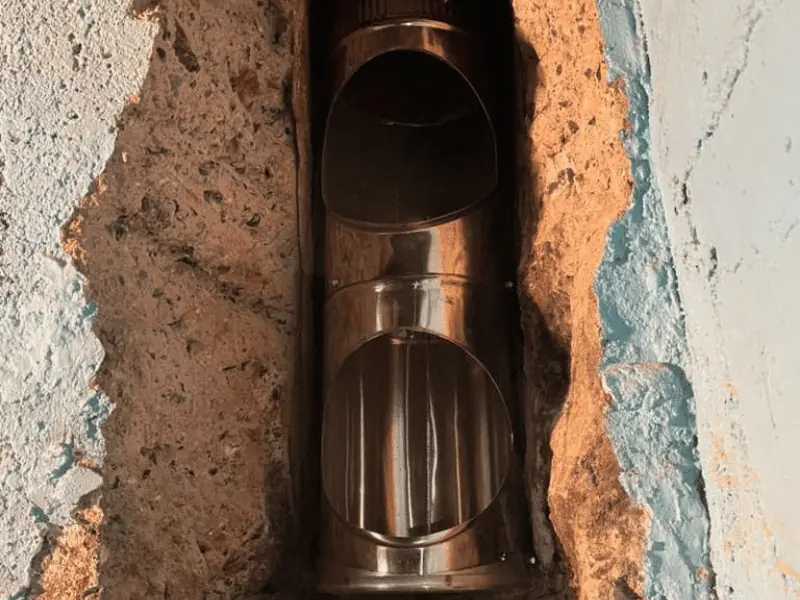
The stainless steel flex liner is Pittsburgh's most popular — navigating pre-war offsets while providing lifetime protection against three-river humidity. 316Ti alloy resists the condensation environment the Steel City's river-valley conditions create.
Why Your Pittsburgh Chimney Needs a New Liner
A deteriorated Pittsburgh liner allows carbon monoxide into living spaces — a life-safety hazard. Three-river humidity accelerates clay tile failure faster than dry climates. And hillside homes with long chimney runs have more liner surface area exposed to corrosive condensation. A stainless liner creates a sealed flue system — the Steel City's most important chimney safety investment.
Liner Types for Pittsburgh
Liner selection for Pittsburgh accounts for appliance type and terrain. Stainless 316Ti flex: our standard for wood and oil — corrosion resistant, lifetime warranty. Aluminum: appropriate for gas-only — Pittsburgh's dominant fuel. Cast-in-place: for severely damaged or offset pre-war flues where inserts can't navigate the path.
Hillside Draft Engineering
Pittsburgh's dramatic terrain means chimney heights vary enormously — a Mt. Washington home may have a chimney run 30-40 feet while a riverfront home has 15-20 feet. Draft dynamics change with height. Our liner sizing calculations account for your specific Pittsburgh elevation and chimney run — ensuring proper draft whether you're on the hilltop or the flats.
Gas Furnace Relining
Pittsburgh's abundant natural gas means most homes heat with gas. Gas furnaces produce lower-temperature exhaust that condenses inside oversized flues — corroding clay tile and creating moisture damage. Properly sized aluminum or stainless liners match your furnace's output for optimal draft, efficiency, and condensation management.