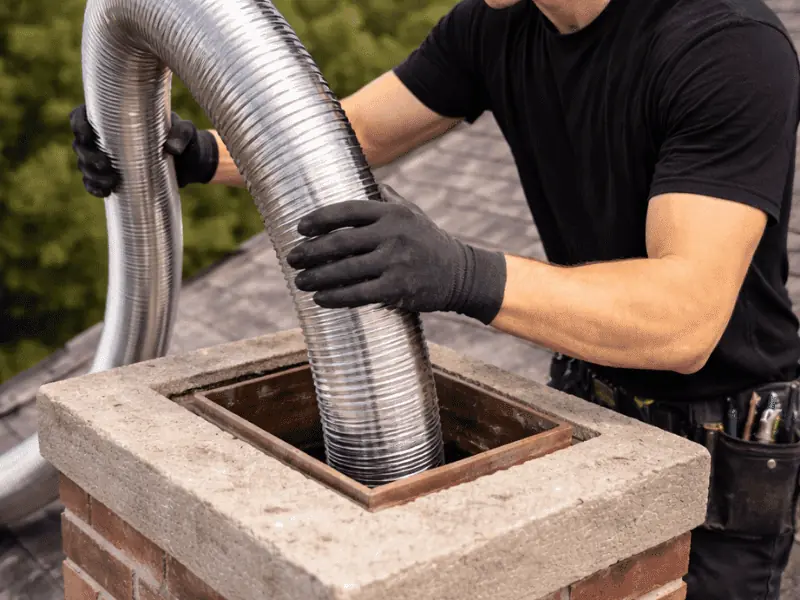
Your chimney liner is the most critical safety component in your chimney system — the barrier between superheated combustion gases (exceeding 1,000°F during normal operation) and your home's combustible wood framing. When this barrier is cracked, missing, or deteriorated, your family is at risk from chimney fires and carbon monoxide exposure. Shamrock Chimney installs UL Listed stainless steel and cast-in-place liners that restore this safety barrier and bring your chimney up to modern code standards.
The Right Liner for Your Situation
We don't push the most expensive option — we recommend the liner system that best fits your chimney's condition, configuration, and your heating appliance. Stainless steel liners are excellent for most situations and cost less than cast-in-place. But when structural reinforcement is needed, or when chimney geometry prevents stainless steel installation, cast-in-place is the better solution. We explain the tradeoffs and let you decide.
What Sets Our Liner Installation Apart
Every liner installation begins with video inspection and precise sizing calculations. We don't estimate — we measure your chimney internally, calculate draft requirements based on your appliance specifications, and select the liner diameter that provides optimal performance. An improperly sized liner creates draft problems that are expensive to correct. Our engineering-based approach gets it right the first time.
UL Listed Materials, Proper Insulation
We install only UL Listed liner systems tested to withstand 2,100°F — meaning they survive even chimney fire conditions. Our stainless steel liners use 304 alloy for wood-burning applications and 316 alloy for gas applications where acidic condensation is a factor. Every installation includes proper insulation wrap or pour — maintaining flue temperature for efficient draft and protecting surrounding masonry from heat transfer.
Complete Installation Documentation
Every liner installation is documented with photographs of the existing condition, the installation process, and the completed system. You receive warranty documentation, liner specifications, and a signed certificate of completion. This documentation satisfies building code inspection, insurance requirements, and real estate transaction needs. We keep copies on file for future reference.
The Importance of a Proper Chimney Liner
Without an intact liner, combustion gases — including carbon monoxide, which is odorless and lethal — can seep through cracks and gaps into your home's living spaces. During a chimney fire (which can occur without warning when creosote ignites), temperatures inside the flue exceed 2,000°F. Without a liner rated for these temperatures, heat transfers through masonry to adjacent wood framing, potentially igniting your home's structure. A proper liner prevents both scenarios.
Code Compliance & Insurance Protection
A properly installed, documented chimney liner satisfies building code requirements and provides the documentation insurance companies require. Homes with unlined chimneys or damaged liners may face insurance coverage limitations. Our installation documentation provides proof of code-compliant liner installation that protects your coverage and your property value.