Your chimney endures temperature swings of hundreds of degrees, driving rain, freeze-thaw cycles, wind, and UV exposure — 365 days a year. Over time, even well-built chimneys develop problems that escalate from minor maintenance into major structural failures if left unaddressed.
The good news? Most chimney problems give warning signs well before they become emergencies. At Shamrock Chimney, our CSIA-certified technicians have inspected tens of thousands of chimneys across 21 states. Here are the five most common warning signs we find — and what you should do about each one.
Why Early Detection Saves Thousands
A simple tuckpointing job to repair deteriorated mortar joints might cost $500–$1,500. But if water penetrates unchecked, you could face a partial or complete chimney rebuild costing $5,000–$15,000+. An annual chimney inspection that catches problems early is the best investment in your chimney’s longevity.
1. Crumbling or Missing Mortar Joints
Mortar joints — the lines between your chimney’s bricks — crack, recede, and eventually fall out from weather exposure. This accelerates dramatically in climates with harsh winters, where the freeze-thaw cycle works like a wedge: water enters tiny cracks, freezes, expands, and widens the crack each cycle.
What to look for: Gaps between bricks visible from ground level, mortar dust in gutters, bricks that appear loose.
The fix: Tuckpointing — removing deteriorated mortar and replacing it with fresh mortar matched to your chimney’s existing composition. When caught early, this is one of the most affordable chimney repairs available.
2. White Staining (Efflorescence)
White, chalky deposits on exterior bricks indicate efflorescence — water migrating through masonry, dissolving mineral salts, and depositing them on the surface. The staining itself is cosmetic, but the underlying cause — moisture penetrating your masonry — leads to spalling bricks, liner deterioration, and structural compromise.
The fix: Identify the moisture source. This may involve crown repair, chimney cap installation, flashing repair, or waterproofing. A Level 2 inspection with camera identifies exactly where water enters the system.
3. Cracked or Damaged Chimney Crown
The chimney crown — the concrete slab atop your chimney — is your first defense against rain, snow, and debris. Many crowns are improperly constructed: just a flat mortar layer rather than properly formed concrete with an overhang and drip edge.
What to look for: Visible cracks (use binoculars from ground level), concrete pieces on the roof, water stains on interior walls near the chimney.
The fix: Minor cracks can be sealed with crown coating products. Severely deteriorated crowns require complete rebuilding with reinforced concrete. At Shamrock Chimney, all replacement crowns include a minimum 2-inch overhang and integrated drip edge.
4. Leaning or Tilting Chimney
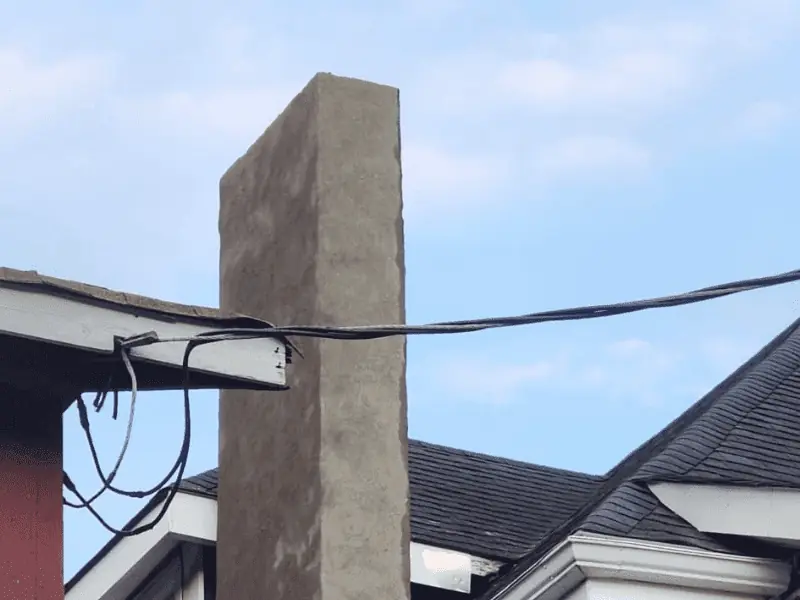
A chimney that leans even slightly is a structural emergency caused by foundation failure, deteriorated mortar, seismic activity, or soil settlement. Even a small tilt creates compounding stress that accelerates deterioration.
What to look for: Visible lean against the roofline, gaps between chimney and siding, interior wall cracks near the chimney.
The fix: Professional structural assessment is required. Solutions range from helical pier stabilization to partial or complete chimney rebuilding from the roofline up. Do not use the fireplace if your chimney is visibly leaning.
5. Rusted Firebox or Damper
Rust inside your firebox or on the damper means consistent moisture exposure. Cast iron and steel don’t rust without it. If you see rust, water is getting into your chimney system through a failing cap, crown, or flashing.
The fix: Replace damaged components and address the moisture source. A chimney cap prevents direct rain entry, while proper flashing and a sound crown prevent water migration. For severely damaged flue liners, a stainless steel liner insert is often the most cost-effective solution.
Water Damage: The Hidden Destroyer
Notice the pattern? Water is involved in nearly every chimney problem. The CSIA identifies water as the single greatest threat to chimney longevity — more destructive than fire, more costly than creosote. A comprehensive waterproofing strategy includes:
- Chimney cap — prevents direct rain and snow entry
- Sound crown — properly constructed with overhang and drip edge
- Intact flashing — sealed junction between chimney and roof
- Vapor-permeable waterproofing — repels water while allowing interior moisture to escape
- Intact mortar joints — no gaps for water infiltration
Preparing Your Chimney for Winter
Address repairs before the heating season with this checklist:
- Schedule a professional chimney inspection — Level 1 minimum
- Complete a chimney sweep if recommended by your technician
- Address any mortar, crown, or flashing repairs identified during inspection
- Verify your chimney cap is secure and undamaged
- Check that your damper opens and closes fully
- Stock properly seasoned firewood (moisture content below 20%)
Which Inspection Level Do You Need?
Level 1: Standard annual inspection. Visual examination of accessible chimney components. Included free with every Shamrock Chimney sweep.
Level 2: Required when selling a home, after a chimney fire, or after an earthquake. Includes video camera examination of the flue interior. Recommended if you haven’t had one in 3+ years.
Level 3: Involves accessing concealed areas when serious hazards are suspected. Typically involves partial demolition of chimney or building components.
Not sure which level you need? Contact our team for a free consultation — we’ll recommend the right inspection based on your chimney’s age, condition, and usage history.
Key Takeaways
- Crumbling mortar, white staining, crown damage, leaning, and rust are the top 5 warning signs
- Water is the #1 enemy of chimney longevity — address moisture sources proactively
- Early repairs cost hundreds; deferred repairs cost thousands
- Annual professional inspection catches problems before they become emergencies
- Never use a fireplace connected to a visibly damaged or leaning chimney
- Regular chimney sweeping is your first line of defense alongside inspections
Shamrock Chimney
CSIA certified, veteran-owned chimney professionals serving 21 states. Our team writes from decades of hands-on experience to help homeowners understand their chimney systems.
Related Articles